Monday, July 15, 2019

Keeping up with the Newbuilds

Thanks to Mary Elizabeth Reid (@ilooktothesea on Twitter) for editing. 

Keeping up with the Newbuilds

by Patrick Webb
@ConductorPat


Move over Kardashians, THIS is a TV show I’d watch! In all seriousness, it may be—understandably—hard to keep up with every new build project going on. According to New Build Steam, who follow new build organizations and publish online articles on them, 20 new standard gauge steam locomotives are under construction, while three more are planned, along with five new diesels. This is just in the UK. In the US, there’s the PRR T1, currently the only standard gauge new build steam locomotive project in the US. 
Some groups may get more attention than others, such as the P2 Steam Locomotive Company, who are building a LNER P2 2-8-2 mikado. This is because they’re a spin off organization from the A1 Steam Locomotive Trust, who built and maintain Tornado, the first 21st Century steam locomotive completed. For this article, I will highlight four organizations, show their goals, and depict their most current progress.
The LMS-Patriot Project
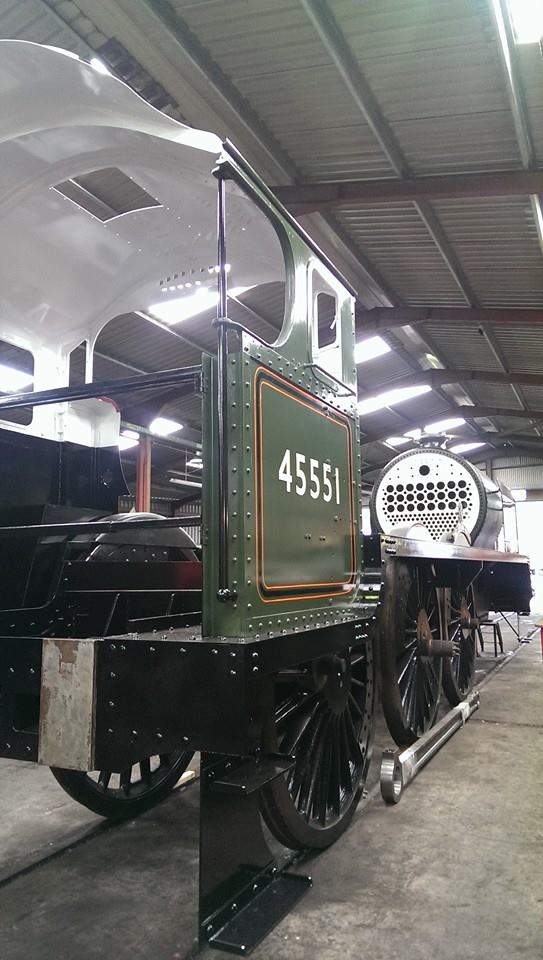
The Unknown Warrior under construction, painted in British Railways Brunswick Green. Members of the LMS-Patriot Project will vote on what colors The Unknown Warrior wears in service. © LMS-Patriot Project, used with permission. 
Launched in April 2008, the same year Tornado was finished, the LMS-Patriot Project’s goal is to build a new member of the LMS Patriots, nicknamed Baby Scots because they were similar to the earlier Royal Scot class. The 4-6-0 ten-wheelers, according to the LMS-Patriot Patriot Project’s website, were withdrawn between 1960—1962, all were scrapped. No. 5551 will be named The Unknown Warrior, selected by a competition in the Steam Railway Magazine, in honour of all who have died in military service since World War 1. 
According to the LMS-Patriot Project’s website, as of December 20th, 2018, The Unknown Warrior’s boiler has been trial-fitted to the frame. The LMS-Patriot Project is currently working on The Unknown Warrior’s lubrication pipework, led by Nigel Day, along with the chassis, boiler and tender frame, and are “considering the options to get ‘The Unknown Warrior’ into steam,” according to a recent Facebook post.
On March 1st, 2019, the LMS-Patriot Project announced they were launching a coach appeal. Many steam locomotives that run on the mainline in the UK, such as Tornado, have support coaches that are used, according to the A1 Steam Locomotive Trust’s website, to house crews and tools, as the infrastructure for steam in the UK has decreased over the years. Recently, a BR Mk1 BSK coach became available for purchase for £100,000, approximately $132,000 in US currency. 
“Even if we decide this vehicle is not for us, we still need to launch this vital appeal for funding to acquire a suitable vehicle,” The LMS-Patriot Project said on their announcement post.  
A photo of the Support Coach in LMS-Patriot Project colors. © LMS-Patriot Project, used with permission. 
A work order has been sent out for The Unknown Warrior’s tender. Riley and Son, who maintain the famous LNER A3 Flying Scotsman for the National Railway Museum, are in talks with the LMS-Patriot Project. The Patriot Project is waiting for a response from The Princess Royal Class Locomotive Trust and Railway Forgings and Castings; Tyseley Locomotive Works announced they will not lobby for the tender order. 
5551 The Unknown Warrior with the boiler fitted, borrowing the tender from LMS Crab No. 13065, another Fowler design. In service both locos used the same Fowler tender. © LMS-Patriot Project, used with permission.
On July 5, 2019, the LMS Patriot-Project announced they had chosen the Princess Royal Locomotive Class Trust (PRCLT) to not just complete The Unknown Warrior’s Tender, but finish the entire locomotive. The PRCLT, according to their website’s Mission Statement page, “exists to promote interest in the Stanier Pacific steam locomotives of the London Midland and Scottish Railway and the Standard Class 4 Tank locomotives of British Railways.” PRCLT own and maintain 4 standard gauge steam locomotives, including LMS Princess Royal Class Princess Margaret Rose
The PRCLT was chosen over Riley & Sons and Railways Forgings & Castings, according to the Patriot-Project’s announcement, which also thanked the non-selected bidders, saying “The decision is one which is not a criticism of their ability to do a first class job, rather a recognition that the PRCLT bid better met our unique requirements.” 
Together, the LMS-Patriot Project and Princess Royal Locomotive Trust to “the highest possible standard and for mainline running.” If you wish to support The LMS-Patriot Project you can donate online here: www.lms-patriot.org.uk/civicrm/contribute/transact?reset=1&id=12  
Doncaster P2 Locomotive Trust
The LNER P2’s, according the LNER Encyclopedia, were designed by Sir Nigel Gresley to haul express trains on the steep Edinburgh to Aberdeen mainline. They were also the largest passenger locomotives on the LNER, and one of few 2-8-2 Mikado classes in the UK. The P2’s were rebuilt by Sir Nigel Gresley’s successor, Edward Thompson, into 4-6-2 Pacifics which were considered a failure by most enthusiasts. However, according to a recent episode of the Podcast Railway Mania, which included LNER historian Simon AC Martin, the rebuilt P2's were more reliable in their new form than original (You can listen to the episode here: www.youtube.com/watch?v=AsY6AW5Ts08). The rebuilt P2's, reclassified as A2/2's, were withdrawn and scrapped from 1959—1961 by British Railways, none were preserved.
Cock O’ the North, renumbered British Railways No. 60501, in the scrap line at Doncaster Works, where she was built, May 1960. © RCTS Yeadon Collection, used with permission of the Doncaster P2 Locomotive Trust. 
The UK has not one, but two new LNER P2’s being built. One, as mentioned earlier, will be built by the P2 Steam Locomotive Company, the other by the Doncaster P2 Locomotive Trust.
The Doncaster P2 Locomotive Trust estimate the cost will be over £5m. The Trust is working with Heritage Doncaster to show the construction at the Doncaster Culture and Learning Centre, which will open in 2020. Despite building locomotives of the same class, the two projects are very different. 
Cock O’ the North in its original form, which is how No. 2007 Prince of Wales will appear when completed. © RCTS Yeadon Collection, used with permission of the Doncaster P2 Locomotive Trust. 
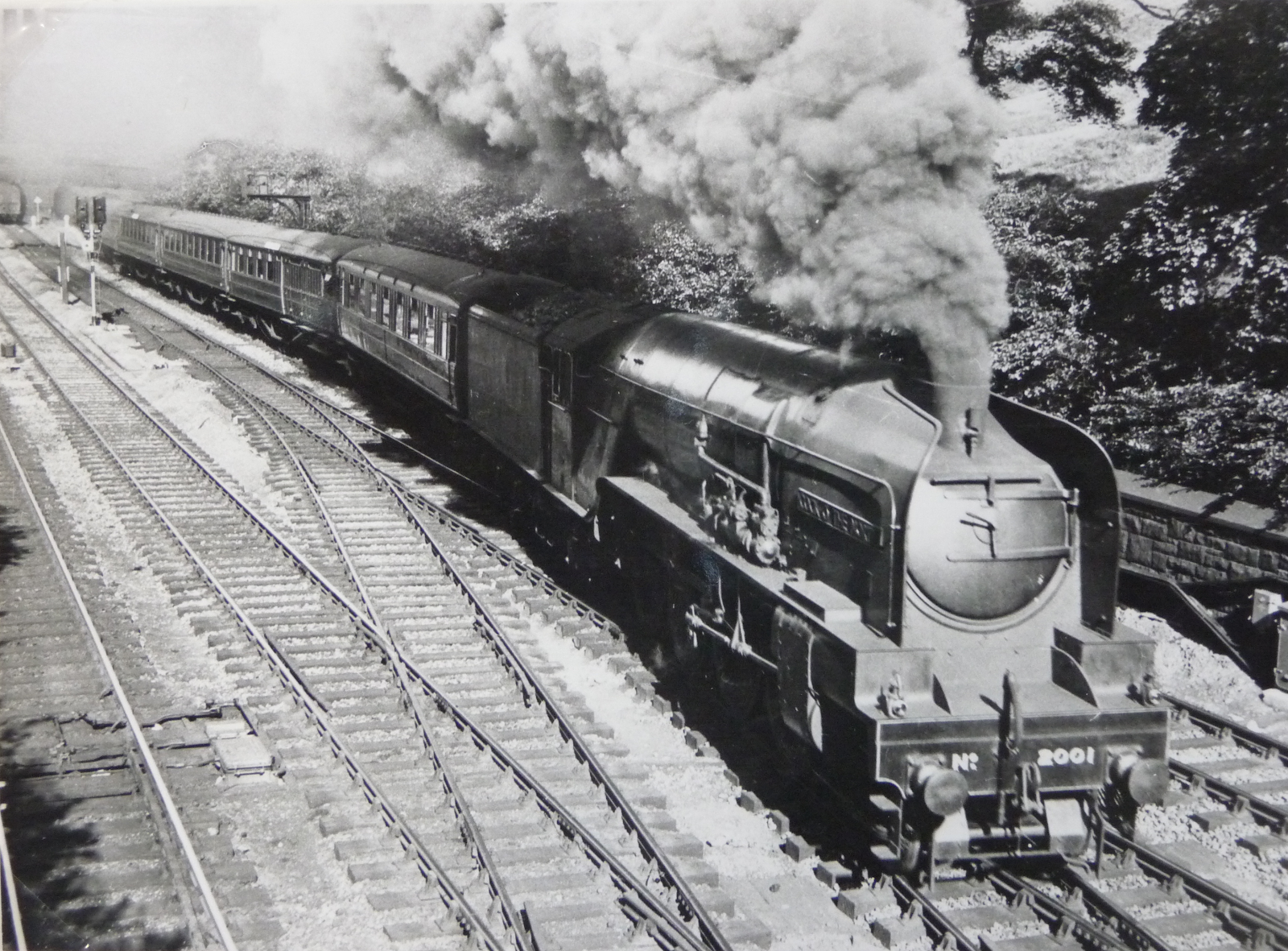
One difference is in the naming and numbering system. The P2 Steam Locomotive Company are numbering their P2 as the newest member of the class, No. 2007, Princes of Wales. In contrast, the Doncaster P2 Locomotive Trust’s P2 will be named and numbered after the prototype, No. 2001, Cock O’ the North
Another difference is in the locomotives’ appearances. Prince of Wales will appear as the first two locomotives were built, with curved smoke deflectors. Cock O’ the North will be built with A4 style streamlining, looking like an enlarged Mallard, the world’s fastest steam locomotive; the original Cock O’ the North was rebuilt in this form in September, 1937.

A colorized photo showing Cock O’ the North in applegreen, showcasing how the replica Cock O’ the North will look when completed. © RCTS Yeadon Collection, used with permission of the Doncaster P2 Locomotive Trust.
A major difference is in the valve gear. Prince of Wales will use rotary cam valve gear, which the first P2s originally had. Cock of the North will use walschaerts valve gear, which the original Cock of the North was converted to in September, 1937, because the Doncaster P2 Locomotive Trust decided the original valve gear was unreliable. 
Currently, only the frames for Cock of the North have been constructed. Those who want to help support the project can sponsor a part or buy merchandise such as a print showing the three forms of Cock O’ the North. There are also clubs to join including The Cock O’ The North Club or Denison Club. 
On May 27, 2019, the Doncaster P2 Locomotive Trust announced on Facebook that thanks to the Denison and COTN club, can now begin machining the frames, in particular drilling the necessary holes, and are closer to putting the frames on display. Work recently began on the Doncaster Library and Museum where Cock O’ The North’s frames will be displayed.  
The Doncaster P2 Locomotive Trust are focusing most of their efforts currently on a museum construction, the progress can be followed via their Facebook page.
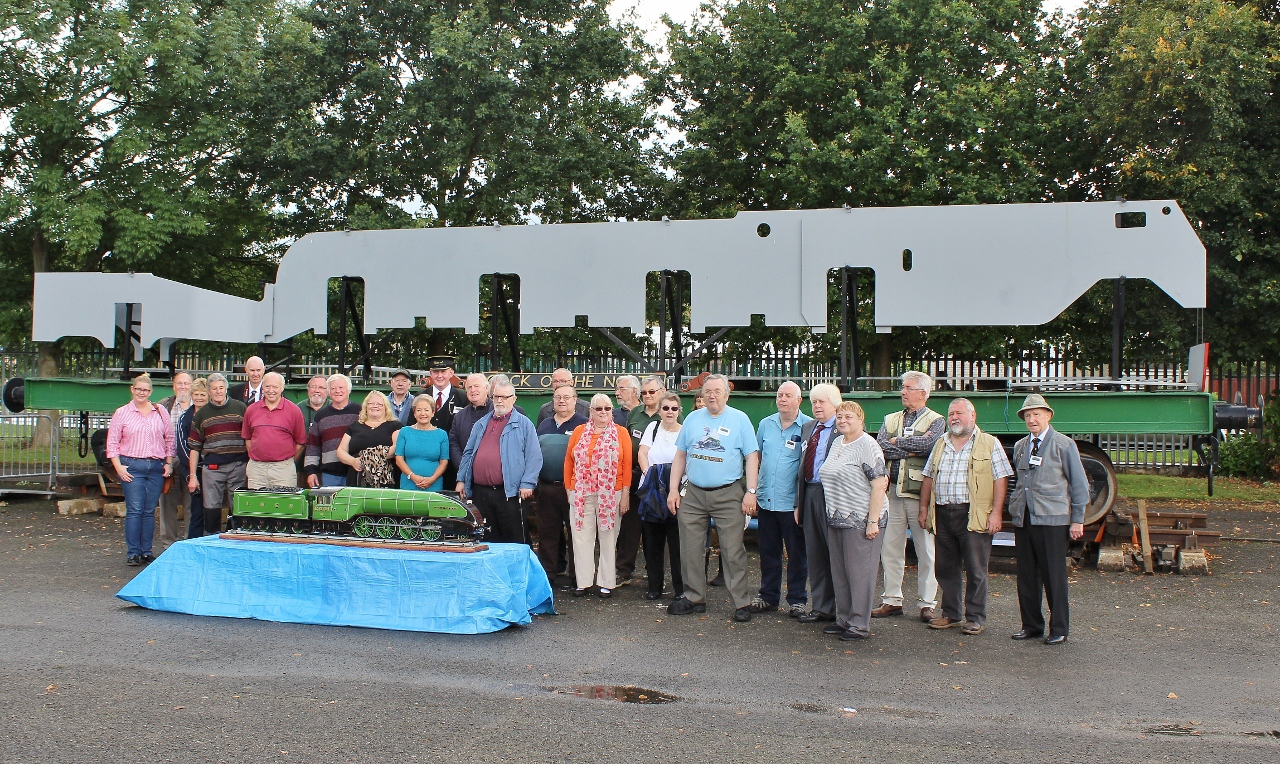
Members of the Doncaster P2 Locomotive Trust Stand with the completed frames at the unveiling ceremony at the South Yorkshire Aircraft Museum on September 9th, 2017, along with a model of Cock of the North, showing how No. 2001 will look when completed. © Doncaster P2 Locomotive Trust, used with permission.

PRR T1 Trust
Cover art of the T1 Trust’s website, showing No. 5550 when complete. © T1 Trust, used with permission.
The PRR T1 class, according to Classic Streamliners, were a class of 52 4-4-4-4 Duplex steam locomotives, with the first of the class being built in 1942, and production members built from 1945—46. The T1’s streamlining was designed by world renown Richard Lowey. The T1s were the last steam locomotives that the Pennsylvania Railroad built, and were built to replace double heading PRR K4 Pacifics, which were beginning to show their age.
The PRR T1s were plagued with wheel slip at high speed and dieselization, which began on the PRR in 1948. The wheelsipping has been the most controversial part of the T1’s legacy. However, this has often been blamed on the PRR not properly training crews used to the smaller K4s. 
In service the PRR T1s were built to reach 100 mph, thanks to their poppet valve gear. However, high speeds caused serious wear and tear on the locomotives. One technician claimed he clocked a T1, on a train running late, at 140 mph; however, this claim is often debated.
Despite being very new, the PRR T1s were withdrawn in 1952,  and were replaced by diesels. From 1951—1955, the PRR sent the T1s for scrap. In 1956, according to the PRR T1 Trust, the last surviving T1 No. 5543 was scrapped, leaving the class extinct.
     
T1 No. 5543 on the scrap line, 1956. Image Credit: Art Duley, © PRR T1 Trust, used with permission. 
The PRR T1 Trust’s goal is to complete a new PRR T1, No. 5550, which is no easy order to fill. The PRR T1 Trust is currently the only standard gauge new build group in the US, inspired by the A1 Steam Locomotive Trust’s completion of Tornado, which is referenced multiple times on the T1 Trust’s FAQ page. The T1 is also a complicated locomotive: standing at 16’ 6”,  it is a rigid-framed duplex locomotive known for wheel slipping with inexperienced crews.
So why build such a complicated locomotive? The T1 Trust explain on their FAQ page that they are Pennsylvania Railroad and T1 fans, and the T1s had the most range capability of the PRR duplex locomotives; No. 5550 will be able to travel around curves that 2-8-4 berkshire Nickel Plate 765 can traverse. Also, the T1s had many unique parts, such as Franklin poppet valves, Duplex drive, and Loewy styling, which helps the locomotive stand out when asking for donations. 
If the T1 Trust is successful, No. 5550 will be the only steam locomotive in the US with poppet valve gear, and the only rigid frame duplex locomotive in the world. No. 5550 will have a similar running range to berkshire Nickel Plate 765.
A question that often comes up is why not build a proven design, such as a NYC streamlined J class Hudson or a Berkshire. The T1 Trust explained that there are already other 4-6-4 and 2-8-4 projects going on, and they do not want to pull resources from them. There is also the potential for learning, “putting to rest,” the FAQ page explains, questions such as how difficult it was to maintain a T1, if they “could actually attain the speeds they were attributed to,” and know what the design was capable of. 
No. 5550 will have subtle differences from the original T1s. No. 5550 will likely have a wheel slip alarm to ensure that wheel slipping is not a concern, along with improvements to the spring rigging, which was part of the T1’s wheelslip problem. No. 5550 is also expected to have Franklin Type B valve gear, similar to sibling No. 5500, which is easier to maintain than the original Franklin Type A valve gear. 
No. 5550 will be equipped with controls necessary for the railroads they will operate on, and the T1 Trust is investigating the possibility of incorporating Positive Train Control, or PTC. No. 5550 may run at Steamtown in Pennsylvania, the Steam Railroading Institute in Owosso, Michigan, and The Cuyahoga Valley Scenic Railroad in Ohio. 
No. 5550 is expected to be capable of running at an average speed of 79 mph on Class 1 Railroads. If allowed on Amtrak’s system, the T1 Trust hope to run No. 5550 at 85—110 mph. 
One question that often comes up regarding No. 5550 is whether or not the T1 Trust will be attempting to break the LNER A4 Mallard’s speed record of 126 mph, which has stood since 1938. Dr. Noble, the T1 Trust Chairman, stated the T1 Trust wants to see what No. 5550 is capable of. 
“There is at least one credible account of a T1 in service reaching a speed of 141 mph,” Dr. Noble explained. “We are not gunning for Mallard per se, however we do feel fairly certain that when built, PRR T1 #5550 could set a new world speed record for steam.”
Chart showing the completed sections of 5550. © T1 Trust, used with permission.
Currently, 29.2% of construction has been completed, along with the purchase of a PRR tender from the New York Railroad Historical Society, and $700,000 raised. According to the T1 Trust’s website, No. 5550 is expected to cost approximately $10 million. This estimate is based off of No. 5550’s weight, the original cost plus inflation, lost skills and Tornado’s construction.
Tender acquired for 5550 from the New York Railroad Historical Society. © T1 Trust, used with permission. 
On New Year’s Eve 2018, the T1 Trust announced that the firebox doors had been completed in Maryland. Sections of the firebox are available for sponsoring at $100 each. Dr. Noble stated the T1 Trust obtained their largest part in 2018, “the entire cylindrical portion of the boiler for 5550 has been completed,” weighing 25,000 pounds, making the boiler now 18’ 2” long.
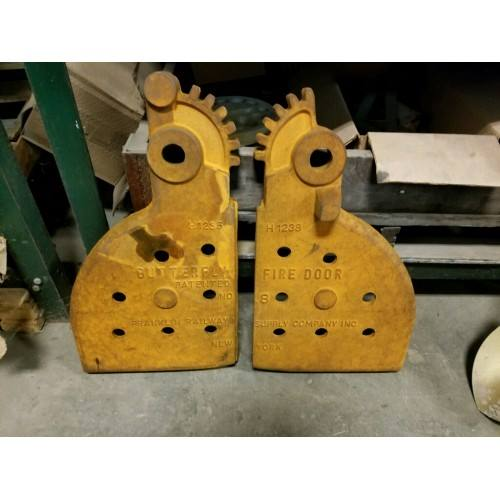
The Recently finished firebox doors. © T1 Trust, used with permission.
On March 24, 1029, The T1 Trust announced that they had placed an order for the front tube boiler sheet, “an essential component of the boiler” as the announcement states, calling it “the beating heart of the new T1.” Continental Fabricators in St. Louis, Missouri are contracted to build the front tube boiler sheet. When completed the front tube boiler sheet will be able to withstand boiler pressure of over 300 PSI. 
The T1 Trust has two original parts from scrapped T1s: a whistle, and most recently a marker light found by the late Art Audely, who collected it from No. 5543 while it awaited scrapping. The marker light was purchased by a Trust member and donated to the T1 Trust. 
People who wish to support the project should check out the T1 Trust’s fundraising center. There are many pieces of merchandise to buy, such as a No. 5550 number plate, and instructions for a Lego set for a T1. There are also options to sponsor drawings, parts such as the boiler or wheels, and to join the Founder’s Club. 
Ivatt Diesel Recreation Society
The London, Midland, and Scottish Railways, or LMS, built the first mainline diesels in England in 1947, setting the ground for future English diesels. No. 10000 and 10001 were designed by H. G. Ivatt, who also designed steam locomotives: according to Andrew Hoseason,
Secretary & Publicitist of the Society, these were the “direct ancestors of classes such as the class 40s [and] 50s,” and forerunners of English Electric produced classes such as the 31s and 37s. 
The Twins in service, wearing their original black and silver livery. They would later wear Brunswick Green until withdrawn. Courtesy IDRS.  See more at: www.lms10000.co.uk
The Twins, Mr. Hoseason explained, were in service with modifications made, until they were withdrawn in 1967 and were the first diesels considered for preservation. Unfortunately, The Consultative Panel For The Preservation Of British Transport Relics felt the cost to restore them to their original condition was too expensive, so both units were scrapped in 1968. General consensus in the UK at galas is that No. 10000 should have been preserved.
Founded in 2011, The Ivatt Diesel Recreation Society aims to build a replica of No. 10000 as close to the original as possible, costing £630,000 or $816,575 US dollars. The Society’s President, Stanley Fletcher, actually worked on the original locomotives, clocking in 150,000 hours as a Commissioning Engineer from English Electric
No. 10000 will be built using parts from existing locomotives, such as from Class 58 58022, a descendant of No. 10000. Other parts will be taken from Class 20s and Class 37s, which will only be available for a short time as these first generation diesels are withdrawn.
58022 at Peak Rail, a preserved railway in the UK. 58022’s biggest contribution to No. 10000 will be its frame, though other parts will be used. Courtesy IDRS.  See more at: www.lms10000.co.uk
Mainline additions would require alterations from the original design that would not justify the additional cost, so No. 10000 will only run on heritage railways. “The intention is that [10000] will be capable of being hauled around the rail network or transferred via specialised low loader,” Mr. Hoseason explained; “there are a couple of companies out there who have the kit to transfer large locomotives.”  
On February 7th, 2019, the National Railway Museum in York donated several parts to the Society. These include vacuum hoses and master controllers from a Class 40, which The Society described as ideal for No. 10000. 
Recently, the Society announced they had acquired a set of bogies from the EM2 Locomotive Society. The Society ran a flash fundraising campaign to cover the cost of the bogies (estimated to cost £8,500), which raised £17,000. 
On July 3, 2019, the Society announced they had purchased a set of  MV 146 traction motors, which will fit in the EM2 bogies. The traction motors, which are located in Holland, are in good condition because they have been stored inside, according to an email update. While the motors will need to be shipped to the UK, the Society predicts they will save the project around 10 thousand pounds. 
The Society also announced a new fundraiser: the President’s Appeal, which aims to raise £100,000 (approximately $129,155.50 US currency), by President Pletcher’s March 2020 birthday. Raffle tickets for the President’s Appeal are now available on The Ivatt-Diesel Recreation Society’s website. 
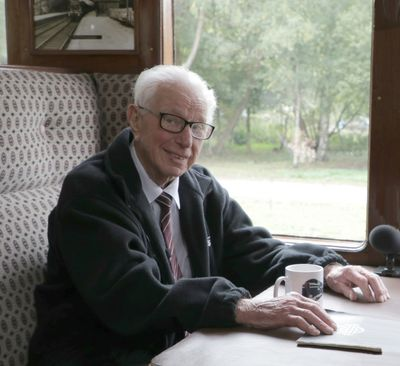
President Stanley Fletcher, who worked with the twins in service. Courtesy IDRS.  See more at: www.lms10000.co.uk
The public can help by donating monthly to the Ivatt-Diesel Recreation Society to give them a regular income. The Society also hopes to find an owner of  a spare industrial unit to act as the Society’s long-term base of operations. The public can also join the Co-Co club (a reference to the name given to No. 10000’s wheel base, with two separate pairs of 6 driving wheels), for £5 a month, every three months there will be a drawing where the winner can receive 50% of the prize fund, with the rest going towards No. 10000’s construction. 
Another appeal the public can help with is the “Buy a Metre Appeal,” to help the Society save motor IH1863 which can be used for No. 10000, before the building it is currently housed in is demolished and the. The cost to move the motor is £3,000 or around $3,756.60 (US). Anyone who donates to the “Buy a Metre Appeal” will have their name on a plague on the side of No. 10000. 
Conclusion
New build locomotives will soon be hauling excursion trains on the mainline and heritage railways, giving older locomotives a rest. Whether or not all of these projects will succeed remains to be seen. The J50 group, who had plans to build a new LNER J50 0-6-0 tank engine, announced on Facebook they were shutting down and donating all funds to the construction of the Prince of Wales and the model display to the Midland & Great Northern Society
What is certain is that new builds are becoming more popular and important for preservation, filling the gap of lost classes for all generations.  

Special thanks to Secretary Hoseason and Dr. Noble for their interviews. Special thanks also to the LMS-Patriot Project, The Doncaster P2 Locomotive Trust, The T1 Trust and The Ivatt-Diesel Recreation Society for permission to use their photographs.

If you’d like to learn more about the organizations in this article, or perhaps go and donate to them, check out their websites, listed below in alphabetical order. Make sure to check them out on their social media as well.  
The Doncaster P2 Locomotive Trust www.cockothenorth.co.uk 
The Ivatt Diesel Recreation Society www.lms10000.co.uk 
Twitter: https://twitter.com/LMS10000 (They are also on Facebook, @LMS10000) 
The LMS Patriot-Project www.lms-patriot.org.uk Facebook: The LMS-Patriot Project
The T1 Trust https://prrt1steamlocomotivetrust.org/index.php Facebook: Pennsylvania Railroad T1 Steam Locomotive Trust

Be sure to check out the podcast Railway Mania, Episode 5 "Edward Thompson, Hero or Villain?" goes into more detail about the P2 rebuilds and Edward Thompson's career. www.youtube.com/watch?v=AsY6AW5Ts08  

Wednesday, July 10, 2019

The Future of the Indiana Transportation Museum (Updated)

Disclaimer: Since 2016, I have been a Save the Nickel Plate and Indiana Transportation Museum supporter. I have tried to keep this article as subjective as possible, any bias is unintentional. The opinions stated by the interviewers do not reflect the opinions of Tuggin' & Trammin' Blogging or Patrick Webb.

2018 and The Indiana Transportation Museum’s eviction and July move out from Forest Park have come and gone. The future brings new opportunities for ITM, such as new riders, but also many challenges to overcome. 
The ITM was founded in the 1960’s, according to American-Rails.com, and worked to preserve Indiana’s Railroad history. For around 50 years the ITM’s main headquarters was in Forest Park, located in Noblesville, until things came toppling down in the late 2010’s.   
One challenge ITM faces is clearing their tarnished reputation. This started in 2016 when seven volunteers, (who Mitch McConnell, the ITM chairman says, were told to leave the museum) accused the museum of mishandling funds and having dangerous tracks. According to RTV6, the seven whistleblowers were fired from the ITM, violating ITM’s whistleblower policy. 
Following the seven whistleblower’s firing, the Hoosier Heritage Port Authority, who owns the line ITM ran on, removed their trackage rights, then announced plans to turn the line into a trail. “Just prior to the HHPA announcement ITM had the railroad inspected by the FRA track inspector and in the FRA report stated the track conditions met Class Two and some areas as Class One,” Mr. McConnell stated; which would mean the tracks were safe to ride on. Mr. McConnell continued: “HHPA called in a private contractor to inspect the railroad who deemed the track as unsafe.”
In Fall 2017, Noblesville filed a complaint with the Indiana Department of Environmental Management who investigated for possible environmental ground contamination, improper chemical storage and waste spills by ITM. IDEM fined ITM $25,312 for a first time offence fine and to pay cleanup costs. 
Noblesville and the Parks Department decided in December 2017 to not renew the ITM’s lease in Forest Park, their home of nearly 60 years, according to the Indianapolis Business Journal. The deadline was set on July 12, 2018 following a Court Case by Judge Paul Felix. Friday July 12, 2019 will be the 1st year anniversary since the ITM was evicted. 
Noblesville Mayor John Ditslear stated in a letter to Hamilton County’s The Times that ITM’s leadership lost trackage rights on what is known to the public as the Nickel Plate Railroad (named after the now defunct railroad company which once owned the line) because of “questionable management, failed efforts and empty promises;” adding the ITM was only allowed to stay in Forest Park due to volunteers’ efforts. Mayor Ditslear stated that ITM sued Noblesville after offered a timeline to move out with a June 2019 deadline. 
Mr. McConnell, responding to the letter, said “But the out plan didn't allow ITM to move any railcars by rail outside the museum grounds fence. The HHPA also refused [to let] ITM use [their] tracks.”
Les McConnell became the Vice Chairperson in 2017, and became the ITM’s Acting Chairperson on July 18, 2018, when his predecessor stepped aside due to personal reasons during the ITM’s Forest Park eviction. “ITM hasn't internally refocused completely. I'm still working on that issue,” Mr. McConnell said. 
ITM’s name became most tarnished during the July 2018 moveout, when many historic pieces were scrapped, according to Mr. McConnell, by the museum assets director Josh Spencer. This included Milwaukee Road SW1 1613, one of 11 SW1 diesel switchers preserved, which some viewed as a childish act to stop other organizations from obtaining equipment. Kevin Kefee, Editorial Vice President of Classic Trains and Trains, compared ITM to a charnel house. 
“Noblesville was threatening to fine ITM for any and all equipment left behind after the deadline and only a few museums came to help and fewer purchased railcars or asked for railcars. ITM needed funds to move critical railcars and equipment to a location for repairs and future use. 1613 was found derelict at a grain elevator with a bad prime mover a broken crankshaft,” Mr. McConnell explained, adding it acted as a donor for other locomotives.
“Nobody came to us and offered us money to move,” Mr. McConnell added. 
ITM was also criticized for suing Noblesville and waiting for the county judge's decision to allow ITM to stay or not, versus beginning the moveout. “The Judge’s decision favored the city and thus shortened the move out time to a short two week time frame,” Mr. McConnell explained, adding “[Underwood Machinery Transport] was given the challenge to move equipment with good success at a high cost.” 
A third challenge is financial. Jim Lesiak, an equipment transport contractor, estimated in the Hamilton County Circuit Court that ITM would have needed $2.5—$3 million to move all 72 pieces of their collection out of Forest Park to their new location. Other costs are the IDEM fine, bills for the ITM’s lawyers, and Nickel Plate Road 587’s approximately $70,000 highway movement cost to Ravenna, Kentucky. 
“587 was the most expensive move due to paying for oversize and overweight permits even after further dismantling of the locomotive so it could be moved on the highways,” Mr. McConnell explained. He also stated the road transportation costs for a diesel locomotive is $40—50,000, and $5—10,000 thousand for a boxcar or caboose.
Excursions are still available in the Noblesville area, under a new operator Nickel Plate Express. Nickel Plate Express has been accused by ITM supporters as being a Noblesville—Fishers replacement for the ITM, and that ITM was evicted quickly to provide NPE with equipment. While the ITM’s collection that was left in Forest Park is currently being auctioned, according to Trains Magazine, none of the collection pieces have been given to Nickel Plate Express. 
Currently, ITM is relocating from Noblesville, 60 miles North, to Logansport and Kokomo, Indiana. ITM is running excursions with rented equipment from US Rail, a short line company, as their diesels 83A, Nickel Plate 426 and Union Pacific 200 were left in Forest Park because ITM was unable to move them out. 
Mayor Kitchell of Logansport, an integral leader in the ITM’s relocation, stated in 2018 that relocation talks started in early 2017. Logansport, Mayor Kitchell explained, is a logical location for a railroad museum due to it’s railroad heritage. Steam locomotives were built in Logansport, one survives at the B&O Railroad Museum, and the Wabash and Pennsylvania Railroads were large employers. 
Mayor Kitchell offered his personal thoughts on ITM. His family held their son’s fourth birthday in Forest Park in 2011, and complimented the ITM on being accommodating. Mayor Kitchell stated his family’s dismay at the “political wranglings involving the museum and its access to tracks to the Indiana State Fair.” 
“ITM had filled a void for the State Fair that would have cost the communities or the state hundreds of thousands of dollars, yet there seemed to be an unusually toxic opposition to its existence. As I followed the museum’s plight in the Indianapolis Star, I couldn’t believe a 501c-3 nonprofit with a 60-year track record could be put through local politics at its worst, all in the name of what some would term progress. The worst part of the story is that the people hurt most are children and families who just want decent things to do and places to go.” 
Mayor Kitchell praised the ITM’s professionalism: “We can make room for a charitable organization that brings tourism dollars to our community and provides free excursions to local residents from schools, nursing homes and centers for the disabled. That’s a part of ITM’s profile its critics don’t mention and ITM doesn’t tout, but it’s one of several ways the museum is going above and beyond to further the cause of our Indiana rail heritage as well as the nation’s.”
Logansport used to have excursions with the Logansport & Eel River Railroad, which ran during the Iron Horse Festival from 1981—2001, until the Logansport & Eel River Railroad stopped excursions. Despite the Festival’s ending, Mayor Kitchell says Logansport has kept its love of trains. Logansport also has a “railroad hospital” to renovate freight cars, an asset, Mayor Kitchell explains, most towns don’t have. 
The ITM has already received a warm welcome in Logansport and Kokomo. 2017’s Polar Bear Express had 14,000 riders, Mayor Kitchell predicted the number will continue increasing. Mayor Kitchell also stated 2017’s Bunny Hop Train brought Logansport and Walton, a neighboring town, closer together as people came to watch the trains at crossings and take videos. 
Meanwhile in Kentucky, Nickel Plate Road 587, the 100 year old steam locomotive and the gem in ITM’s collection, rests in the Kentucky Steam Heritage Corporation’s Ravenna, Kentucky works. 587 was once a famous steam locomotive, according to Mr. Keefe. 587 was one of 625 locomotives known as the USRA Light Mikado 2-8-2 class. During World War 1, the US’ railroads were nationalized, according to History.com, under the command of the United States Railroad Administration. The USRA was disbanded in 1920, leaving behind a legacy of simple standard locomotives, according to Classic Streamliners, with 1,930 standard steam locomotives built. After the USRA’s disbandment, 641 more USRA Light Mikados were built for US Railroad.
587 is one of only seven surviving USRA Light Mikados. In 1955, 587 was donated by the Nickel Plate Road to Indianapolis for display. In 1983, 587 was pulled from being a park display and became a mainline excursion engine in 1988. 587 brushed shoulders with equally famous excursion locos Norfolk & Western 611 and 1218, and she travelled to two National Railroad Historical Society Conventions. 587 was the first locomotive to be registered by the National Register of Historic Places.    
Unfortunately, 587 needed another restoration, which became stalled at ITM’s workshop, and the landlocked engine was into a precarious situation with the eviction. Thankfully, the Kentucky Steam Heritage Corporation helped rescue 587 from Forest Park. In return, ITM transferred ownership of their canteen tender, a former L&N “Big Emma” tender, PRR Tool Car and Baggage car. 
To help cover 587’s movement and restoration costs, Mission 587 was formed. The organization is a coalition of Save the Nickel Plate, The Kentucky Steam Heritage Corporation, and The ITM. KSHC will restore 587 and Save the Nickel Plate will provide public relations and advertising assistance. 
Mr. McConnell declined to comment on The ITM’s role in Mission 587, ITM is maintaining ownership of 587. Chris Campbell, Kentucky Steam Heritage Corporation President, stated in a Facebook video that restoration will start once ITM acquires the funds. 
Mission 587 has a Go Fund Me fundraiser to cover 587’s transportation cost. Currently $667 of $10,000 have been raised. Logan Day, a former Save the Nickel Plate spokesman (who stepped down to run for the position of Mayor in Fishers, which he lost to long time Mayor Scott Fadness) stated even if $10,000 is not raised, all funds will go towards 587. Mr. Day, as a third party, also added that both sides are equally at fault for the July moveout. 
Mr. Day argues both sides didn’t keep good relations with each other, but added ITM was left to maintain the tracks “when the Hoosier Heritage Port Authority is the ONLY agency we've identified with a written obligation to do so. We [at Save the Nickel Plate] are left wondering how ITM was removed as operator of the railroad line for the Port Authority's ‘failure’ to maintain the railroad.” Mr. Day added that Save the Nickel Plate does not desire speak extensively on the issues regarding the ITM. 
When asked about the ITM’s 2019 plans, Mr. McConnell declined to comment. “We do have goals,” He explained, “but I'm not making it public at this time. Major corporations have strategic plans, but don't announce them until after they’re ready to fully implement them.” 
Mr. McConnell described the ITM’s reception in Logansport and Kokomo as “A great opportunity” and that he was very thankful that Mayor Kitchell wanted the ITM. He declined to comment on the opportunities and obstacles the ITM has with the move, and on how they have learned as an organization from the events in recent years. 
Mr. McConnell did say: “The environmental issues are still looming. Clean up company ELAM Inc. discovered a chemical found in the groundwater called by trade name Chromium 6 inside the North area of the museum grounds. It's important to note that part of the museum grounds was an old chemical company property from the early 1900s, which can be found in state records, and also found in the local newspaper article from the 1920s the same land was used as the city dump.” The Indiana Department of Environmental Management said there was no other source for the chemical spills ITM was fined for. 
When asked about Nickel Plate 587, Mr. McConnell said “Absolutely. 587 will run again.” He estimated 587 will be operational in 5—10 years. Regarding ITM as a whole, and where they will be in 10—20 years, Mr. McConnell replied “Alive.” 
“[ITM’s had] many scares over the years. People have intentionally and unintentionally caused the demoralizing events that closed the chapter of ITM in Forest Park. ITM didn't start in Forest Park and it won't end there.” 
Concluding, Mr. McConnell stated “I'm an Assistant Fire Chief and for many years and I've put out fires and prevented fires. I'm not letting ITM burn down to the ground. Hopefully at the end of 2019 I can explain in more detail.”  Mr. McConnell recommends that every rail museum and rail heritage organization must maintain an active roll with their local communities and adhere to all federal, state and local codes. 
On March 5, 2019, Trains Magazine announced that ITM are in talks to purchase the now defunct Logansport & Eel River Railroad. According to reporter Chris Anderson, ITM has already paid for 1.6 miles of track. This will give ITM a lot more security as owning their own property will ensure they cannot be evicted. 
With 2018 behind them, the ITM can look to the future and rebuilding. The ITM has a rare chance to learn and start over in a new location. Hopefully, 2019 will be the end of the ITM’s recent woes and will be a more positive year for the museum. 
Special thanks to Mayor Kitchell, Mr. Day and Mr. McConnell for their interviews. Special thanks also to Mary Elizabeth Reid who helped edit the article. She can be found on Twitter at @ilooktothesea


To read more about the ITM’s recent situation, please check out my sources below. If you wish to donate towards 587’s movement costs, check out Mission 587’s Go Fund Me Fundraiser: www.gofundme.com/mission587 


ITM can also be found on Facebook. Readers should note that ITM’s Facebook account is not very active, the last post was on December 19, 2018. www.facebook.com/IndianaTransportationMuseum 

Sources
American-Rails.com. “Indiana Transportation Museum.” www.american-rails.com/itm.html 
Anderson, Chris. “Indiana Transportation Museum close on purchase of railroad.” Trains 
Magazine. 5 March, 2019. 
on-purchase-of-railroad
Classic Streamliners. “United States Railroad Administration.” 
Ditslear, John. “Other Voices: Noblesville Mayor John Distlear.” Hamilton County The Times. 22 
September, 2018. 
Erdoby, Lindsey. “Noblesville ends lease agreement with Indiana Transportation Museum.” 
Indianapolis Business Journal. 20 December, 2017.  
History.com. “US Governments takes over control of nation’s railroads.” 5 November, 2009. 
oads 
Kitchell, Dave. “Other Voices: Mayor Dave Kitchell.” Hamilton County The Times. 14 September, 2018. 
Keefee, Kevin. Classic Trains Magazine. “The Survivor: Nickel Plate 587.” http://cs.trains.com/ctr/b/mileposts/archive/2018/07/10/the-survivor-nickel-plate-587.aspx
IBJ Staff. “UPDATE: Noblesville says museum mishandled chemicals on park grounds.” 
Indianapolis Business Journal. 31 March, 2017. 
Leapple, Wayne. “Indiana Transportation Museum equipment auction scheduled.” Trains 
Magazine. 9 May, 2019.
Mission 587. “Mission 587.” Go Fund Me. www.gofundme.com/mission587 
Quinn, Samm. “Judge Gives Transportation Museum Until July 12 to Leave Noblesville Park.” 
Indianapolis Business Journal. 29 June, 2018. 
RTV6 The Indy Channel. “Feds, state investigating Indiana Transportation Museum.” 14 June, 
Tuhoy, John. “Judge Orders Train Museum Out of Noblesville Home by July 12.” Indianapolis 
Star. 29 June, 2019. 
me-july-12/746477002/ 

Saturday, July 6, 2019

Article Self-Publishing Announcement & Writing Rejection Advice from the #WritingCommunity

Hello Star Tugs!

Happy Saturday. I hope you all are doing well. I have a few announcements I'd like to make regarding the blog. 

Article Self-Publishing On the Blog

So as you might have seen in earlier posts (if you're new here and don't know what I'm talking about, hello! Glad to have you here today) I've been trying to publish two train-related articles I wrote a while back. The articles are The Future of the ITM and Keeping Up with the Newbuilds. The first year anniversary is coming up for The Future of the ITM, I'm not sure of the exact date, I know it was around July 12, 2018 (for all I know it could've been today!) 

I'm disappointed I wasn't able to get them published elsewhere, and I'm growing concerned that if I wait longer, the articles will lose relevance. So, I have decided to self publish the articles on here, for you to enjoy. Because I was given permission to use photos from different organizations in Keeping Up with the Newbuilds, I reached out to them again to ensure it's still all right. Once I get the okay from every organization, I will publish the article on here. 

The Future of the ITM may appear on here soon, but since I just wrote a train related blog post discussing Mallard, the world's fastest steam locomotive (you can find it below this post, if you're interested), I might want to space it out. 

I held a poll on my Twitter asking if people were interested in seeing the train articles on here. I got a 50-50 split (thank you for my large response, to you two voters 😜, seriously though thanks for the feedback) so I know it's not everyone's cup of tea. 

If trains aren't your thing, please bare with me. I promise this blog won't become 100% train related, if you're here for the writing. I will try and balance out my two big loves for trains and writing. 

I should mention that when I publish the articles I won't include my normal beginning of "Hello Tuggers," or my ending line "Keeeeeep Tuggin!" to keep these professional. 

All right, onto the next topic. 

#WritingCommunity Rejection Advice 

I wrote a blog post a while ago discussing rejection, and I'd like to go back to that (mostly because I forgot I wrote it when I called for the advice. #Woops 😜) Rejection is something that I don't think you get used to until you get stuff published, and even then it's not going to go away. All writers, including previously published ones, are going to get rejected. Rejections can be frustrating. You've put so much passion into a piece of work, and then you're told someone doesn't want it. 

I know I still struggle with rejections. Sometimes I take it too personal and attach myself too much to the writing. If the writing is rejected, I personally feel rejected. I'd advise upcoming creators (like myself) to remember that rejections are a part of the job, and that it's okay to get rejected. It hurts, but it does not define you, or label your personal worth. (This' something which may take a long time, I know for me it's a Work in Progress, hang in there. 

I wanted to get some more perspectives, so I tweeted out to the #WritingCommunity on Twitter (who you can find by using that hashtag), and asked how they deal with rejections. This' also a part of my #FF post. Quick side note, #FF means Follow Friday, and if you're a writer, get onto the Twitter and interact with people(genuinely of course) and you might just get a shout out on Follow Friday. Don't forget to do it for others. Here are some responses to my tweet: 

@johansenmila tweeted "I submit to someone else. Keep at it."

@evilgeniustobe "As much as a rejection letter is telling me that I’m not what they’re looking for or that I’m not a right fit for them...is me saying the same thing back to the rejection letter. It’s just not my path and they aren’t what I’m looking for and we just wouldn’t be a right fit."

@CHart_author suggests you create a rejection folder to store them in and go back to writing. Great advice Mr. Hart! 

@ElizabethWrite4 "I shrug it off. They know if they're right for me. They aren't. That's cool. I still see a lot of neat folks running around here on twitter, even those who have rejected, and I still interact and they're still cool."

@TheEveMovie give a short piece of advice: "Move on." I really like this advice. It's very easy to get stuck up on a rejection, moving on is an important key to accepting rejections. 

@CC_the_martian "Once I’m done laughing it off to hide the pain of rejection I look for more places to submit and try again. If the sting lingers I try to lose myself in my work or in something I like."

In conclusion, Not Lev Gleason (@Lev_Gleason) "I like to remind myself that 'failure is success training"'. If you can take the lessons of your rejection, learn from your mistakes and grow as an artist then you're actually winning. If you can take the lessons of your rejection, learn from your mistakes and grow as an artist then you're actually winning."

Thank you everyone for your responses. To keep this blog post from being too long I didn't include everyone, so if you'd like to get some more advice, please go and look at my thread here. Give everyone who responded to my thread a look through, and maybe a follow if you like their feed.
https://twitter.com/ConductorPat/status/1147238003443666944 

Thanks for reading this update everyone. If you'd like to keep up with me, you can find me on Twitter @ConductorPat. All right, with that said, I'm going to give this a read through and go relax, maybe continue watching Stranger Things (I just started it today and it is SO good!! I regret falling behind). Keep Creating everyone, and I'll see you on the Tramway!