Friday, April 24, 2020

End of Semester/Writing Update

Welcome back to the Tramway.

Well friends, the end of the semester has come once again. Albeit a little different this time, given the COVID-19 Pandemic and needing to stay at home. I hope you are all doing well and are staying healthy and safe.

Working on the final exams from home was definitely a different experience. A few of my exams were easier than I was expecting, and quite possibly easier than they would have been in person. (I would've preferred to do them in person, but given the circumstances, I can't complain). Surprisingly, I had some time during finals week to work on my writing again, which was a nice change of pace.

Classes don't start again until Monday for May Term, our mini semester to wrap off the year, so I have the weekend to relax and do some writing. So far during this stay at home time, I've finished two short stories (one that I turned out much longer than anticipated, and have began rewriting (for the final time) my first project.

The first project I finished is a retelling of the classic Knight vs a Dragon fairy tale, but with a few twists. It's one I have several drafts of since I wrote it my sophomore year of college. I'm still trying to work out the kinks with my ideas (the main problem being trying to describe some fantasy-technology and make the story work).

The second is a short story in a series I have planned, but haven't started yet, a sci-fi world where railroads race across the stars, inspired by the amazing anime series Galaxy Express 999 and Galaxy Railways. I was inspired by a story about train wreck songs to write a story about a wreck in space, which didn't turn out as I planned. I was planning to have a character die, but that seemed too obvious. Or maybe I'm just too kind to my characters. Then again, is having them nearly sucked into a black hole kind? 😜

Speaking of trains in space, do you remember when I talked about the Bethany Galactic Railway chronicles? Well... I decided to scrap that idea. The space part anyways. The idea of talking locomotives with faces in space didn't seem to click with me (if you want to use that, by all means, go for it, it's not mine to claim. There has been other series like that, See Galaxy Express 999 or Galaxy Railways).

As I've mentioned on Twitter, Johnny and the other characters who make up the story are some of my oldest characters. Since I decided to write in 5th or 6th Grade, I have been working on the project in some form. It's a story I want to finish, but I've struggled to do so.

As I explained when I've struggled with my overwriting/overthinking, I have in the past struggled to finish projects and continuously rewrote projects. And then, I saw this video a few weeks ago by Ellen Brock:


When I heard the section about writers who start projects but never finish, I thought "Crap, that's me!" I decided enough was enough, I was going to finish this draft. I wrote myself a simplified outline (based off mine using the Snowflake Outline Method, link here if interested) and have been working at it ever since.

So where am I currently? I finished Chapter 4, and am working on making my way through Chapter 5. Unfortunately Chapters 3, 4 and 5 in my outline would have been more condensed, but I had to spread them out a bit. I'm aiming for 12 pages per chapter, which I have stuck to so far (with maybe an extra page to finish a chapter well. I'll condense it in the edit).

All right, last writing update: I have continued working on The Occasional Express, my spin off blog for train related news and opinion pieces. The views fluctuate with the posts, same as here, but I'm all right with that. For a time during the stay at home/quarantine, I considered not writing any more posts. However, I'm going to stick with it, and see where it goes.

One thing that is consistent in my writing is that is has given me a bit of escapism from the stress of the news and just life recently. Being able to create has helped me feel like I have some normalcy as well. I hope you are finding the same in whatever you may be creating or doing to keep yourself mentally healthy.

That's all I have for this blog entry. For my writing friends, what have you been working on during these crazy times? And for my non writing friends, what have you been doing/working on?

Thank you for reading. If you enjoyed this blog post, please consider subscribing here on Blogger to keep updated. You can also find me on Facebook, and Twitter. Thank you, and I'll see you on the Tramway!

Wednesday, April 15, 2020

Coronavirus Update (And my Quarantine Reading List so Far)

Hello everyone, welcome back to the Tramway. I hope I find you all well during these very stressful times. It's been a while since I've written (probably the longest hiatus I've had).

I think you can probably guess the reason why, but in case you're reading this post 2020 (if you are, hello from the past!) the Coronavirus shut down/chaos meant that my blogs had to go on hold as more important issues came up.

So a while back I had to move off campus early, which wasn't what I was hoping would happen, but wasn't avoidable. The Governor of Indiana ordered restaurants to close to dining service, which meant the dining hall on campus had to close. I wasn't happy about it, but all things considered, it wasn't their fault (the reason I was so upset was that we planned to stay open but everyone stayed in their rooms, and that changed quickly. As I've seen, that's what this time has been full of: quick changes). And I certainly am lucky I'm not a senior this year (current seniors of the Class of 2020, High School or College, I'm so sorry, you have my sympathy).

I'm now back at home, which is going well. It's slightly awkward because our current place is small, but we're making due. With that said, I don't have it the worst, and I don't want to sound like I do. Thankfully my family is safe and healthy, and we have enough food to last us. As my Mom has pointed out to me, with our background, we know how to survived during a crisis like this.

Getting back on topic of the hiatus, my school work has increased a lot, along with my stress/anxiety, so I haven't felt that motivated to write anything for fun. Thankfully, I have things more under control, though next week is Finals Week (fingers crossed everyone 🤞)

I have taken one online exam so far, so I kinda know what to expect. Hopefully it won't be too bad.

So that's where I'm at with the Coronavirus. I hope you and your family and friends are safe as well. And if you're working as an essential worker, please be careful and look after yourselves. And thank you.

Quarantine Reading List (So Far) 

So as I hinted to in the title of this post, I've been catching up on some reading, which has been really nice. I finally got around to reading some indie works I was able to get copies of for free (thank you Authors) and I figured "Hey? Wouldn't it be fun to write about what I've been reading so far?" So here we are. I'm going to format this in a bit of a list (not in any particular order, except my best attempt at chronological order).

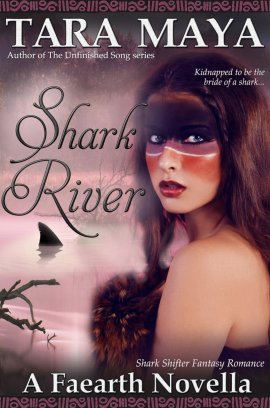
1. Shark River, a Faerth Novella by Tara Maya

screenshot_2018-10-25-18-25-37~28889603797960838168..png
Image © Tara Maya
When I saw the title of this book, I was hooked, and was glad that I was able to read it for free. (Thank you Ms. Maya). 

Shark River is a standalone Novella in a larger series, the Unsong Series. To provide a brief synopsis, Dindi, a low level magic user, is kidnapped to be a sacrifice to a Shark shapeshifter, who is attacking a village, and her friend (along with a captured enemy) must rescue her before she is killed. I think this may also be the first Novella I've read.

Unfortunately, this book isn't on GoodReads (as far as I can tell), so I couldn't review it there, so I'll summarize my thoughts here: I loved it.

Even though I haven't read the other books in the series, I was still able to understand the story and the world. The worldbuilding in the story is also very well done, and you can easily understand the conflict that arises from the world, such as the agony of being banished. 

The main characters are very likable, and the resolution makes you feel very glad inside. The ending could be seen as cheesy to some, but I felt it worked well with what was set up beforehand. 

Overall, I definitely recommend checking out Shark River, and the rest of the Unfinished Song Series. If you want to download Shark River for free, you can do so here on Ms. Maya's website. Want another review? Check out this post here

2. Autonomous by Andy Marino
27919232
Image © Disney-Hyperion Publications. Used Under Fair Use
The next book is more mainstream, which I found in the Bookmobile that came to my College before we closed. Autonomous by Andy Marino is a road trip if your AI (spoiler alert) was modelled after KARR from Knight Rider (not KITT mind you, KARR) or Ultron from Marvel. It's a thriller/suspense as 4 friends' secrets are exposed to each other, and they try to survive at the AI of their car, dubbed Otto, becomes more aware.

I enjoyed this book, however, I do want to note that the book has been slightly mis-targeted. It says it's a Young Adult book, however there are themes in Autonomous that are not suitable for readers under the age of say 16 or 17. The characters do feel fleshed out, and have a lot of flaws, which creates a lot of drama between them.

While a lot of reviews on GoodReads are very negative (mostly due to the target audience being Young Adults 14 and above, I personally enjoyed it, and would reccomend for readers who are prepared to read a more mature novel. If you want to buy a copy (and support bookstores during these hard times) you can find a copy for sale on BookShop.org here. (Disclaimer: I do not make any money from sales)

3. Beauty Pop Volume 1

Image © Viz Media. Used under Fair Use.
This' another book from the Bookmobile. Now I haven't read a lot of Manga (except for the first volume of Death Note, which I need to go back to at some point). So when I saw this and read the synopsis, I decided to give it a look into. And I'm glad I did. The story is a slice of life drama that helped me forget about my current struggles.

The story follows a young hairdresser who takes on the "Scissors Project" at her school, even though she doesn't want to be in the spotlight, and does it just for the art. It took me some time to adjust to the manga's format, though I did adjust and really enjoyed seeing another way to format comics/manga. 

Ms. Arai's writing is very enjoyable, and the artwork compliments it well. My only regret with this book is that I don't have any other volumes, so I'll have to wait a while before I can read Volume 2. It will definitely be worth the wait. 

If you want to check out Beauty Pop Volume 1, you can find it on BookShop.Org here. (Again, I do not make money by doing so, I just really like BookShop.org and feel they're a business worth backing). 

4. Fire Arrow by Edith Pattou

294936
Image © Magic Carpet Books. Used Under Fair Use.
Another book I for got for free thanks to the Bookmobile, "Fire Arrow" is the second book in a fantasy series, which follows one of the secondary protagonists from the first book, Brie, as she goes on a quest into a magical land to avenge her Father's Killer. To aid her quest, Brie inherits a magical arrow, and as she goes on her vengeful mission, she learns the killer is closer to her than she thinks.

What I really liked about Fire Arrow is that we see the affects of seeking revenge on Brie. (Minor Spoiler)


After killing some of her father's killers, Brie feels an immense sense of guilt, especially after she and her friend argued over her going down the path of revenge. Brie learns from it, and becomes a better person for it.

I really liked the world building of the land Fire Arrow is set in, and it's made me want to go and find the first book and future sequels. I'd recommend starting with the first book, but Fire Arrow (in some ways) works well as a standalone book, despite being a sequel.

If you're interested in Fire Arrow, you can find it on BookShop.org here.

5. Tristan by Sylvain St.-Pierre

44294086. sy475
Image © Goal Publications. Used Under Fair Use
This' the most recent book I finished since the Stay At Home push came. Tristan by Sylvain St-Pierre is a sci-fi revenge story following the titular main character, Tristan, going after the people responsible for him being locked in cryo for 10 years. 

Like Shark River, I was able to get a copy of Tristan for free (thanks Mr. St-Pierre!) and I definitely enjoyed reading Tristan and seeing his journey. 

Tristan is definitely one of the most violent books I have read, which's fair because this' a revenge story following an alien who resembles a bear. Tristan is more than brawn, he's also very intelligent, which helps him break into places and trick people when necessary. (Again, Minor Spoilers ahead)

The most tragic part of Tristan's story is his manipulation of Alex, a human who is into aliens, and seeing the way Tristan manipulates him (and also drugs to make him sick so he can break into his work) is heartbreaking.

On that topic, I guess my main critique of the book is that Tristan might be too unlikable as a main character, though that may just be my personal bias showing. Tristan is definitely more of an anti-hero than a hero, which there is nothing wrong with, and it does work for the main plot of the story. 

If Tristan sounds up your alley, you can find a copy here.

All right before I finish, I want to mention the book I'm currently reading.

The Van Helsing Paradox by Evelyn Chartres 

The Van Helsing Paradox is a book I've been meaning to read for a while, which I found out about by interacting with the author a few times on Twitter. Like Shark River and Tristan, The Van Helsing Paradox can be found online for free, such as on Google Books. (Sorry, no link this time, I'm not sure if it will work or be a personal url, I'm also having internet problems at the moment).

I'm only a few pages in so far, but I'm really enjoying the story. I will go into more detail on this book when I get farther in.

What have you been reading during this very trying time? Are you reaching out to new books or going back to old favorites? Let me know on here, LinkedIn, Twitter or Facebook. Thanks for reading everyone. Stay healthy, keep washing your hands, and I'll See you on the Tramway. 

Thursday, March 12, 2020

Thoughts on Avatar: TLA Finale & Books by Non-White &/Or Male Authors

Welcome back to the Tramway!

I hope I find you all well today. Things are going well on my end. Class' getting a little chaotic again, but I am managing.

Today, I want to lighten things up a little. The last post was very serious (which it needed to be) but I don't want every post to quite so serious. (There is nothing wrong with that, let me be clear, but that is not what I intended Tug & Tram Blogging to be. I'm also probably not the right person for that).

As you can read by the title of this post, I have two topics to talk about. So let's get right into it!

Avatar: The Last Airbender Finale (Spoilers)

Well, after several late nights binging Avatar with my friend Jacob, we finally completed all three seasons of Avatar: The Last Airbender. It feels very bittersweet. On the one hand, I've finally seen the series, but on the other hand, I have no more new Avatar to watch. (Unless I start buying the comics, but that's a whole other topic in itself).

Now, as a writer, I can say one thing for certain: finishing stories are hard. It's not something that creators get right the first time. And if you're not careful, a bad ending can ruin the whole experience for a reader. Now, whether or not that's due to unfair expectations or writing, I'm not entirely sure. One recent example I can think of is Star Wars: The Rise of Skywalker. For some people, it was a really good ending, for others, it didn't match their expectations. I personally liked the movie, though I do admit it has some problems, and the dripping of new information from the novelization is not helping either.

Now, what does Rise of Skywalker have to do with Avatar? Well, both are the endings for their respective sagas, and surprisingly, have a lot of similarities. (Spoilers for Avatar & Rise of Skywalker from this point on).

In Avatar, Fire Lord Ozai acts a lot like Emperor Palpatine. He has a final plan to end the war, and is willing to murder millions to do so. Another similarity is that both of their plans include new giant ships that will bring about their "final order," although this is where the similarities begin to divert.

Fire Lord Ozai, renaming himself the Phoenix King, leads several firebenders on their ships to use the powers of Sozen's Comet to increase their powers tenfold. And they go on a torch mission of the Earth Kingdom.

This' where we finally see, after seasons of buildup, Aang confronts Fire Lord Ozai. And the battle lives up to our expectations! The battle was very satisfying, as Aang struggles with the moral dilemma of how to end the war without killing. And he finds the way thanks to a giant Lion Turtle. He stays true to himself, and fulfills his duties as the Avatar.

Most of the plot points in the story are completed. The war is over, Zuko becomes Fire Lord, and works with Aang to restore their broken world. Characters are reunited with their family members, and peace is back in the world. We also get a certain love plot resolved (yes!) I was very afraid we wouldn't see Aang and Katara's relationship resolved, but we do.

Also, Uncle Iroh gets his tea shop back. It's very satisfying to see him, retired from fighting, just able to relax in peace. It's something that mentors don't usually get in fiction. Often, they die like Obi-Wan in Episode 4.

One thing I will say is that it was almost distracting seeing the similarities between Rise of Skywalker and Avatar's finale. And I have to say, Avatar's ending felt much more satisfying.

Is that a fair comparison? Probably not. Star Wars is a long running, multi-media series, while Avatar is limited to the show, the comics and one spin off show, currently. (I apologize if I missed anything else) With Star Wars, we know that there will be something else coming in the next few years. As for whether or not Rise of Skywalker satisfyingly ends the Skywalker Saga, well, I think we need to wait a few years to a decade before we say that.

All right, I think that sums up my thoughts on Avatar (and also Rise of Skywalker). Time for our next topic.

Books by Non-White &/Or Male Authors 

In my last post I said I wanted to do more to help fellow writers who are not like me, ie. white, straight, heterosexuals males. While this' a small step, I want to offer some recommendations for books written by people who aren't like me. This' by no means a "Be all, End All" list of books you should read by more diverse people, but I hope it's a good start. Also, if you have any recommendations, by all means let me know! I'd love to diversify my reading more. All right, lets' get to it!

But before we do, please be aware that several of these books might have elements that're triggering/upsetting for readers. In particular Books 1, 4, 5 and 6. Please read at your own discretion/as you feel comfortable.

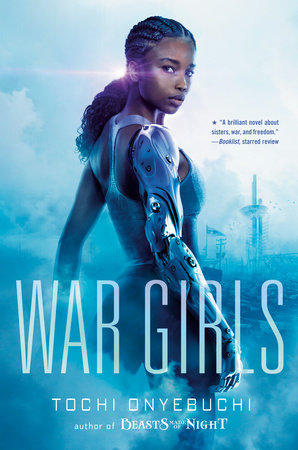
#1 War Girls by Tochi Onyebuchi

War Girls by Tochi Onyebuchi 

My first recommendation is a book I'm currently reading. War Girls is a Science Fiction/(Afro-futurism?) novel about a Civil War in Nigeria, and the story of two sisters who're caught in the middle. I won't go into too much detail, (As I don't want to spoil anything), so here are my general thoughts.

The story is very complex and tragic. We see the characters lose a lot, as the war takes more and more from both sides. We see the effects of becoming a cyborg and what a civil war being fought with mechs (think Robotech) would look like. It's brutal, and the ethics of both sides are questioned.

There's also a lot of cultural elements included, which's due to Mr. Oyenbuchi being from Nigeria originally (he currently lives in the US). I don't want to comment on those elements, in terms of analysis, because (aside from taking World Literature in English) I know next to nothing about Nigeria, so I really have no right to comment. I will say that it adds to the tension between the two sides: Nigeria and Biafra.

Which is actually a relevant topic. When reading I assumed (mistakenly) that Biafra was a fictional state made for the story. Turns out, The Biafran-Nigerian Civil War in "War Girls" is based off a real life event in the 1960's, which is still impacting Nigeria today. This' truly a book that could only be written by someone in the cultural setting.

We also see the impacts of post-colonial superpowers trying to influence the events for their own profits, such as the selling of weapons, which offers some very relevant critique of Capitalism and Western countries. I haven't finished the book yet, but I'm close, and can already recommend this book.

If you are interested and would like to buy a copy of War Girls, please check your local bookstore, or visit the Penguin Random House website here, or you can check out Bookshop.org's link here.

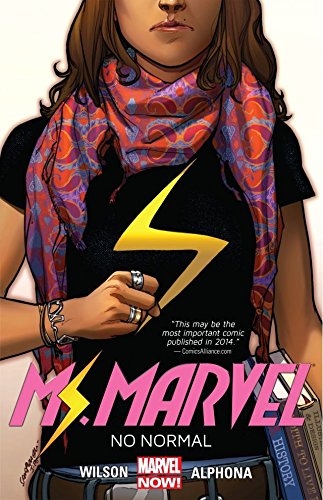
#2 G Willow Wilson's Ms. Marvel run

Image result for ms marvel volume 1

My next recommendation takes us into the world of comics, in particular Marvel. It's also one of my favorite modern comic book runs. G Willow Wilson is a female Muslim writer who is well known for her works in comics and novels. She has worked on famous comic book characters such as Wonder Woman, the X-Men and Superman. I'd argue that her most famous run is her 2013-2018 run on the rebooted Ms. Marvel. You can read more about Ms. Wilson on here website here.

Now, key word here is rebooted. Kamala Khan, who most people know to wear the mantle Ms. Marvel, is not the first. That title belongs to Carol Danvers, aka the modern Captain Marvel. Kamala Khan, in universe, is a nerd and huge fan of Captain Marvel. So when she gets powers, it makes sense that she wears the mantle of Ms. Marvel.

Kamala is an important character for Marvel. She's one of the first Muslim superheroes to be the title character of a book, and is one of the newest characters who has stuck around. Comics have a bit of a history of introducing new characters who don't stick around for long. Kamala has broken that mold, and I don't see her going away any time soon.

I love Wilson's run with Ms. Marvel. She writes very believable characters, in particular teens, and she's not afraid to tackle big issues such as voting, discrimination and self identity. Kamala is a very relatable character who is also inspiring as she overcomes obstacles thrown her way. She's also super funny.

I definitely reccomend reading Wilson's run with Ms. Marvel. You can find Ms. Marvel Volume 1 "No Normal" on Bookshop.org here.

#3 The Belles by Dhonielle Clayton

Image result for the belles

The next book is another series, although I've only read book one. The Belles is a fantasy novel written by Dhonielle Clayton, and the COO of We Need Diverse Books. The Belles is one of her newest books, published in 2018. It is the first of a series, with the second book "The Everlasting Rose," was recently released. You can check out her website here.

The Belles is set in the world of Orléans, where people are born with gray skin and can only become members of society when worked on by a Belle, a group of women with magical powers allowing them to mold people's bodies and physical appearances. Our main protagonist is Camellia, who wants to become the Favorite of the Royal Family, but realizes the dangers of the royal court.

Surprisingly, The Belles was inspired by the Uglies series, which I read in high school, though Ms. Clayton makes the idea of changing your body as your own. You can read about Dhonielle Clayton's other books here.  

The Belles is a very enjoyable book, and while it's set in a fantasy world, you can see the critique of modern culture and in particular beauty standards. Despite having a lot of focus on makeup, which I'm not personally into, I still found The Belles a fun read. 

If you want to purchase The Belles, please visit your local bookstore, or check out Bookshop.org's link here. (Please note that I'm not getting paid by Bookshop.org)

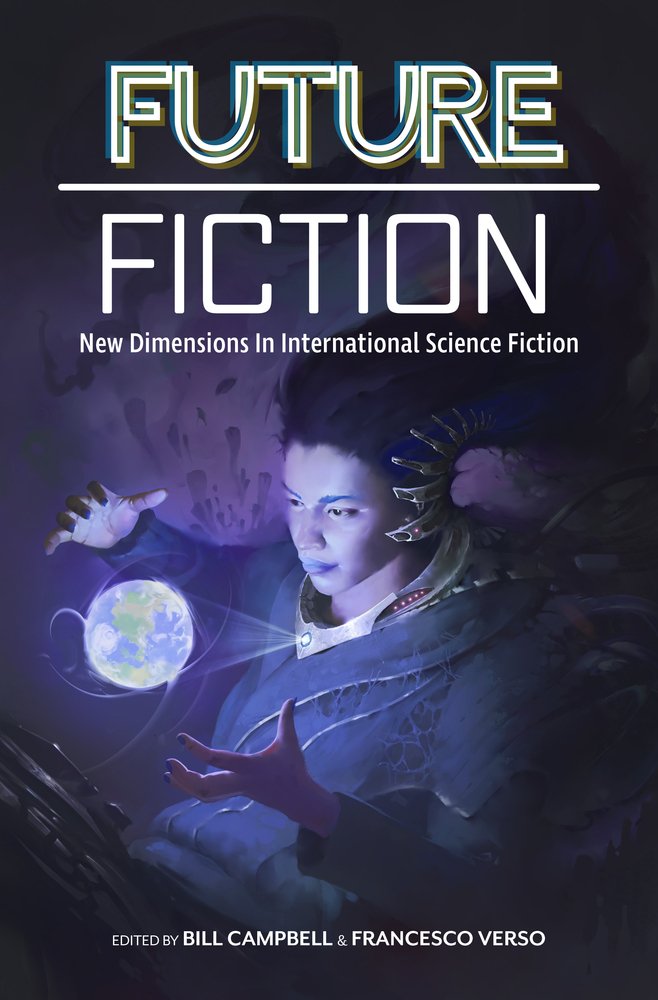
#4 Future Fiction: New Dimensions in International Science Fiction 

Image result for future fiction

I've spoken about Future Fiction in the past, but it seemed too good not to share again. Future Fiction: New Dimensions in International Science Fiction is an anthology collection of authors from around the world, edited by Bill Campbell and Francesco Verso. We have stories from authors ranging from India to Canada, and all are very different. One story deals with an AI house personified as a woman, another with people in India able to take life force energy from dying people, and... the dreaded Panda VR Sex. (Will I FOREVER be haunted by that story?!)

In all seriousness, it's actually... you know, I'm not going to spoil that one. If you're curious, you can go find the book at your library or buy it here. All the stories are different from each other, and you never know quite what you're going to find next.

I had the pleasure of meeting Bill Campbell in person Freshman year of college when he came to speak at Goshen College, to talk about Book #5, and the struggles of African American Writers to break into publishing. He's from Pittsburgh and runs Rosarium Publishing, which works to give diverse voices a place in the world. You can read an interview with him here, or check out his page on the African American Literature Book Club here.

#5  Mothership: Tales from Afrofuritism & Beyond

Image result for mothership bill campbell

Again, this book seemed too good not to share. Mothership is the first anthology that Mr. Campbell helped to edit that I ran across. Mothership is a collection of short stories written solely by African Americans, who have won Pulitzer Prizes, American Book Awards, World Fantasy Awards, and The Bram Stroker award.

The stories deal with serious issues that African Americans deal with, and can be at times a bit of a heavy read. However, I still recommend giving this book a read. The forward also gives a look into Mr. Campbell's frustration at African Americans in Science Fiction, being relegated to supporting roles. Mothership's stories allow African Americans to be at the forefront of the stories.

You can find Mothership on Bookshop.org here.

#6 The Vorkosigan Saga

Image result for vorkosigan saga 

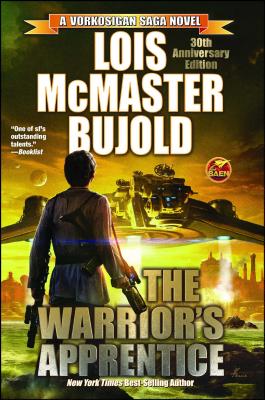
Now our last author is white, but I feel that, given my description above, an exception can be made. All tides lift all ships, as the old saying goes. Our last author is Lois McMaster Bujold, author of the cult classic book series the Vorkosigan Saga. The series follows the adventures of Miles Vorkosigan, a member of the high class on Barryar, a very patriarchal empire, and follows his struggles due to his birth defects from a botched attempt to assassinate his parents.

Miles is not your average protagonist. He's not a physically towering, guns blazing figure. He's short (described as "dwarfish"), and his main strength is his mind, not his physical fighting skills. Sometimes the stories can drag a little towards the middle (from the perspective of someone used to lots of action) but the stories still kept my attention as Miles outwits his antagonists who always underestimate him.

With that said, I do wish to reiterate that the Vorkosigan Saga has some potentially triggering elements, including assault (threatened and done) and trauma. "Shards of Honor" in particular has some potentially triggering elements, so please read at your own discretion/as you are comfortable.

Now, going into the series, there's a bit of a question of "Where exactly do I start?" There's a prequel book, Falling Free, which will help a later story make sense, but doesn't really connect (and happens hundreds of years before Book 1). Miles doesn't actually appear as a character until "The Warrior's Apprentice" (pictured above), and we actually follow his Mom for a few books. I was slightly disappointed that Cordelia took a minor role, but looking at a Goodreads list of the series, she does come back into the forefront in later books.

I have personally read up to Book 11, "Memory," and took a bit of a break (as I just read 11 books of the same series in a short amount of time). But it's definitely one I will go back to at some point.

More so, the series is still ongoing! The last book, No. 16, was published in 2016. You can find the earlier mentioned list here to help you find a jumping on point that works for you. I would personally recommend with Book 2 "Shards of Honor." You can also read the author's recommended reading list here.

Unfortunately, Bookshop.org only has a novella for sale, which you can find here. You can also find Ms. Bujold's Amazon page here.

That's all for this post. Do you have any books by non-white/male authors you'd like to recommend? Let me know in the comments on Blogger, Facebook, Twitter, or LinkedIn. You can find me on Facebook, @TugTramway, @ConductorPat on Twitter, and on LinkedIn as my regular name (let me know if you'd like to connect).


Thank you again for checking out this post, I hope you enjoyed it. If this post is popular, I might do another one in the future. Thanks again for reading, and I'll see you on the Tramway!

Monday, March 9, 2020

Lady Luck Sent for Peer Review (& Being Transparent)

Welcome back to the Tramway.

Happy post-daylight savings time everyone (Also, can I get an UGGH, because Daylight Savings Time is annoying).

I hope you're all doing well this Monday (or whenever you're reading). Today, I want to give some updates on my Senior Writing Project, The Iluckstrious Adventures of Lady Luck Volume 1 "The Monorail Conspiracy," and also open up a bit for some of my concerns with Lady Luck, and writing in the 12st Century in general.

All right, first the updates.

Peer Review Copies Sent Out

After pushing it off for a long time, I finally got the courage to send Lady Luck out to some friends for peer reviewing (Thanks again folks). Peer reviewing is a pretty big step for me. I also sent out some questions, which will hopefully help me process the feedback I receive. Shout out to Emma Lombard for peer reviewing my comments. Thanks Emma!! You can find her on Twitter, @LombardEmma.

My plan moving forward is to do more research on the 1940's, make sure I have my historical facts down pat (even though it is a semi-fictional setting) and begin work on the second draft hopefully over the summer, before presenting it to the Pinchpenny Press for my senior project.

Quick Fun Fact: this' the first image I saw of Lady Luck on the Public Domain Superhero Wikipedia. Source: https://pdsh.fandom.com/wiki/Lady_Luck

In the mean time, I will also need to decide upon a backup project, in case the Press Board rejects my piece. (It is a possibility, one that I would like to be prepared for). But I'm confident that, with enough time put in, I can have Lady Luck Volume 1 ready in time.

All right, onto the next segment.

Being Transparent

So... this' a topic I've been meaning to write about for some time. In fact, the draft for this blog post was dated to September 5, 2019. I've been scared to write about this topic, but I feel that I should be transparent. Perhaps more for myself, but that's beside the point.

Also, please keep in mind (if you are rereading this at a later date) this post represents where I am as of the date of publication, and will (likely) not represent me in the future. I certainly hope not, I hope I have grown since this point.

All right, here we go.

Writing in the 21st Century has a lot of new concerns writers need to consider. We're in an era where people have higher expectations of writers and the addressing of issues in the real world. Gone is the era where overt racism is tolerated.

One of my concerns is accusations of Cultural Appropriation. Cultural Appropriation, as defined by the Cambridge Dictionary, is "the act of taking or using things from a culture that is not your own, especially without showing that you understand or respect this culture."

Examples can include wearing another cultures religious symbols are tattoos that do not have significant meaning to you, wearing another culture's clothing (see picture below), there are several categories for what can be cultural appropriation.

An example of cultural appropriation, white women wearing Indigenous dresses. Source: By Frank H. Nowell - Alaska-Yukon-Pacific Exposition Collection, Public Domain, https://commons.wikimedia.org/w/index.php?curid=74096868

My first experience with the controversy that comes with cultural appropriation came when I was in high school, when rival high school Goshen High School was faced with a controversy pulling it into the national light.

You see, the GHS' mascot for the longest time was the Goshen.... Redskins (left un-abbreviated for clarity, I apologize in advance if this upsets people). There was a push back to change it, and a rallying cry by Goshen's community (majority white) to keep the mascot. In 2015, the mascot was dropped, and replaced with the Redhawks. You can read an article about the decision here.

When I first heard about it, I was in a very different headset at the time. (Which, for now, I will leave at that). Looking back, with my new perspective, I see how bad the name really is, and how it needed to be changed.

I researched the history of the mascot, and found a lot of VERY racist things that Goshen High School did in the past, such as describing victories as scalpings. Yeah, not exactly culturally progressive, or sensitive.

What I didn't know then, was that a big push back to Goshen's mascot was by Indiana's only federally recognized Indigenous tribe, the Pokagon Band of the Potawatomi, who said using the word Red****s was the same as using the N-word towards African Americans. Again, I apologize if leaving the first use of the word is being insensitive, I am only leaving it so that my point is clear.

Looking back, I'm honestly ashamed I didn't see Goshen's mascot as racist beforehand, when it so obviously is. We even had a joke at my high school how PETA was going to come after our Mascot because Falcons kill animals. However, there's no real parallel between an animal, and a racial stereotype, which people felt strongly about, because of the "heritage" of its use.

So, why am I talking about this? I'm going to break it down a bit more.

Fear

I am very afraid of cultural appropriation, or rather being accused of cultural appropriation. Do I have a right to be? I don't know entirely, if I'm honest. Cultural Appropriation is certainly not going anywhere (just recently Khloe Kardashian was accused of it, which you can read about here.) And the criticism of it is a very serious and sincere topic that needs to be addressed.

But what exactly is the source of my fear? Well, it also connects to my other concerns with my privilege. If you follow me on my Twitter, or my Facebook Page, you know my race. For those who don't, I'm a white, straight, male.

I have a lot of privilege, and I do not know what that means for me as a writer. Take Lady Luck, for example, I have characters who are not white, and do not have the same sexuality as me. Do I have a right to write about experiences that're not my own?

Again, I'm not entirely sure if I do or not. I am trying to represent other experiences accurately. My biggest concern is my representation of the Japanese Internment Camps, which is not a major part of my story, but is still important for one chapter, and the overall theme of the piece.

I recently checked out George Takei's "They Called us Enemy" from the library, and will use it as a reference for facts on the Internment Camps. While I do have some fictional elements in the story, I still have to make sure that I represent the "Basic Facts," if you will, as accurately as possible.

Now, will I get all the characters and all the experiences correct? Unfortunately not. I can try to immerse myself into other cultural experiences, but at the end of the day, I cannot became Japanese, Chinese, African American, or Latino, for example. I'll always be a white Mennonite man, and I will have my cultural biases, whether intentionally or not, in my pieces.

Concerns Over Backlashes/My Future as a Writer

Another source of my fear has been recent controversies in the writing community. (One of which got so bad that I had to leave Twitter and the #WritingCommunity for awhile).

The first one I saw was the #IStandwithCourtneyMilan on Twitter. Essentially, a Chinese American writer accused a white writer of gate keeping and racism in her piece, was kicked out of a prominent
romance writer organization, which led to a big backlash and an award ceremony being cancelled due to people's distrust of the organization. (I will leave you to look into that yourselves, I don't want to  drag this post out. Also, looking into it again might not be the best for my mental health).

One tweet that I saw quoted (which I will reference here) by Courtney Milan, is something I've been pondering for a while. Courtney Milan was discussing the aforementioned white writer (who wrote a story in Imperial China) and said, (summarized) "Don't write about how bad other cultures are because you will look like a F***ing racist."

I got scared because of my piece, which's written in the 1940's. I mention the Imperial Japanese a little, but they're not the main antagonists, that's the Nazis (because Nazis are easy targets for criticism, also, relevance due to the rise of new fascist groups).

Still, is it even my place to try and critique that era? I do weigh criticism in my story at the US as well, in particular for the treatment of the Japanese in the Internment Camps. Though, following the controversies I've seen, I wonder if it's my place to do so, and if I do, will I see backlash from my campus community, or in the future?

The truth is, to boil it down further, I am afraid of the future. What place do I have, as a straight white male, in a world demanding more diversity from not just characters, but writers and other creators? Which we REALLY need, by the way, let me make that clear.

I've found myself getting caught in a mind trap, regarding the push for representation, that I feel (but cannot say with authority, since I haven't researched it) that other white creators feel like more representation means less of them. That someone is saying "Your voice does not matter anymore," or "We don't want you anymore." Which is really about more representation, because let's face it, white people are over represented in everything. If we truly care about putting diverse characters in our stories, we need to also do so in real life, in our media, publishing, and for our fellow writers.

What is the role for people like me? I don't know. But that's a part of the hope for the future. A challenge, as my friend Jacob pointed out. A challenge to do better, to help my fellow writers who're underrepresented get their fair share of the pie and seat at the table. Again, how will I do that? I'm not sure. But I do know that I need to do better, and will work towards being more inclusive, in and off the page.

For further reading on this topic, please refer to the links below, including an article from Writing About Writing which helped me process.

Do you have any suggestions on how to help underrepresented writers? What is a topic you found struggling to talk about with others? For me, I found writing on this topic was very helpful. If you feel comfortable, please share your answers in the comments either on LinkedIn, Facebook, or Twitter.

Also, concluding thought. No matter your background, your ethnicity, sexuality, or writing background, if you feel you have a story to tell, go for it. You don't need a writing major to do so. Go forth, because your voice, and your story matters. Thank you, and I'll see you on the Tramway.

www.chrisbrecheen.com/2018/08/wont-someone-think-of-straight-white.html

www.nytimes.com/2020/03/06/books/american-dirt-oprah-book-club-apple-tv.html

www.latimes.com/entertainment-arts/books/story/2020-03-07/american-dirt-apology-tour-oprah

https://medium.com/@nettlefish/cultural-appropriation-for-the-worried-writer-some-practical-advice-ac21710685e3

Thursday, February 27, 2020

The History of Mighty Man: The Forgotten Propaganda South African Superhero

Welcome back to the Tramway.

Today we delve into the history of another forgotten superhero, though unlike our previous characters of discussion, this one is more recent. Another difference from previous posts is that this character is not from an American publisher, but a South African one. Prepare for a wild ride folks, because we're looking into the history of Mighty Man: The Forgotten South African Propaganda Superhero.

a static image rendering a preview of the first page of the PDF document
Cover of Afri-Comics #1. Source: UCLA Library, International Digital Ephemera Project. http://idep.library.ucla.edu/search#!/document/africanephemera:20

Before we begin, I want to mention that this series was inspired by Mr. Rogues, who does videos on superheroes and super villains. You can find one of his videos here.

General Info/Origin Story

Mighty Man's alias is Danny Ndhlomo, who lives in Soweto, South Africa. In Afri-Comics #1, published by.... we'll get to that later (believe me, the history behind this comic deserves a section to itself) we learn that Danny is a Cop. He's injured in the line of duty and shot. Thankfully, Danny survives, but the doctor (a white doctor I should mention, keep that in mind, it will become important later) cannot remove the bullet, because it landed too close to Danny's heart.

Still wanting to help the public, Danny re-enlists and is transferred to the records department, where he meets Donna Buthelezi, his boss and love interest.

Danny and Donna get along well, which helps. Donna's brother is kidnapped, and she's blackmailed by a local gang to steal police files on the gang. Danny catches her leaving with the files, but takes the blame, and goes on the run. He climbs onto a truck, which he falls off of in the jungle. As it goes during superhero origins, things go from bad to worse.

It begins raining, and Danny's heart begins to give out. The universe, deciding to give Danny a hand, shoots down a lightning bolt and opens a path to an underground cavern system. Danny crawls in for shelter, but the pain returns when he tries to get a drink of water, and falls in.

Then... underground aliens find him? It's-really hard to explain, so I'll just let you read it and see for yourself.


You REALLY can't make some of this shit up, can you? Image Credit: Afri Comics No. 1, UCLA Library. https://idep.library.ucla.edu/search#!/document/africanephemera:20

The underground aliens heal Danny, removing the bullet and give him powers. Returning with a costume the underground aliens give him, Danny swears to use his powers for good. Thus, Mighty Man is born.

All things considered, I think Mighty Man has an all right costume. The mask is slightly weird, but the color balance is pretty good. It might seem similar to another, more popular American superhero. That's right, Mighty Man is a rip off of... Superman.

Big surprise am I right? 

The costume is nearly identically, color wise, except the M is moved to above the belt, with some yellow lining added for good measure, and of course the addition of the mask. However, there is one big difference between Superman and Mighty Man.

Superman has a history of fighting against discrimination, that's what he stands for. Most famously, he fought the KKK in a 1950's Radio Show, which was retold in a recent comic run "Superman Smashes the Klan," (I won't go into too much detail on that here, as that's a blog post for another day).

Mighty Man, on the other hand, was a propaganda weapon who NEVER addressed the issues in South Africa at the time, in particular the Racism of the Apartheid Regime. Let me explain.

Real Life Background

So who published Mighty Man and Afri-Comics? The South African Apartheid Government.... kinda. You see, according to an article by Business Insider South Africa, the Apartheid Government were trying to find new forms of propaganda to counteract Communism, and Anti-Racism, while trying to make themselves look like the source of Law and Order. AND, encouraging Law and Order by telling people to not not question the system in place.

Though one quote claims the comics were to "help educate the black man in the ways of Western society, social concerns and free enterprise,” according to John McGoff, an American collaborator on the project, we all know. We all know.

That's right, Americans also helped with this. Afri Comics were made in New York by Manville Inc., a market research company which did an analysis of what the Apartheid's government in 1973 was to the rest of the World. The man who oversaw the comics was Eschel Roodie, the Secretary of the Department of Information. Jan van Zyl Alberts, a South African businessman, was the front man of the business. 

Now if you're like me, you might know much about South African Apartheid. (We learned it in high school, but it wasn't very in depth). Let's backtrack a little. In 1948, according to History.com, the National Party began Apartheid, essentially the South African equivalent of Jim Crow. (Even to the point where, on the History.com website, there's a photo of a sign that reads "Caution: Beware of Natives.)

Indigenous Africans were forced to live in separate areas from their White Overlords, and contact was made as limited as possible. Which's why there's so few white people in the Mighty Man comics. 

Interracial marriage was outlawed in 1950, and that was with 4 groups: Bantu (Black Africans), "Colored" (their language choice, not mine, biracial), white, and Asian (people from India or Pakistan). 80% of the land was set aside for the White Supremacists, and non-whites were forced to have passes to go into the "restricted" areas. The term used was "Separate Development," aka "Separate But Equal," aka "We're racist and we don't want to interact with you." 

Now that we have that context, let's return to Mighty Man

Backlash/Death of Mighty Man

17 issues of Afri Comics were produced, and 470,000 copies were made from 1975-77. Now, Afri-Comics failed as propoganda. Why? Because people were not fooled by it!

The worst example of the racism is in the roles people play in the comics. For example, white people are never portrayed as the villains in any of the stories. Also, the doctor who heals Mighty Man is white, while the nurses are all black. There's a lot of coded racism that's trying to subconsciously tell people what they can and can't do. Thankfully, the young people of Soweto saw right though it.

In 1976, Soweto students burned Afri Comics in protest of the Apartheid Regime, during the Soweto Uprising (You can read about that here). The University of California Los Angeles, who have preserved the comics, go into more detail on their website. During the uprising, students burned newsstands and threw the comics onto the ground, which caused the US Publishers to back out. 

What was "worse" for the Regime, the amount of money they were spending (secretly) on the comics were revealed by the Rand Daily Mail, a South African newspaper, during what was called the "Information Scandal." Eschel Roodie, according to the ACLU website, had to leave South Africa after being charged with misappropriating funds, (even though they told him to go ahead), he escaped to the US where he stayed until he died in 1993. 

The Apartheid Regime spent R64 Million (In US Currency today is around $4,133,969.92). That's a lot of money to spend on a comic that doesn't do it's job. With their propaganda exposed, the Apartheid Regime ended Afri Comics, and Mighty Man fell into obscurity.

If it were not for the UCLA Library, Mighty Man might've been lost to our general knowledge. Thankfully, Professor William H. Worger had collected all of the comics, and they were digitally scanned. So now you can read the comics for free, and the history of the lesser known propaganda has been preserved.

Which is thankful, because so few copies exist. This' likely due to the Soweto Uprising and the negative reputation the character had.

And before I finish up with my personal thoughts, a quick fun fact:

The Apartheid Regime gained the idea for making a comic... from the CIA. According to the ACLU Website, according to a quote from Jan van Zyl Alberts, who had friends in the CIA.

If I Rewrote Mighty Man...

So here's a little fun, for these history posts I'm going to do a segment called "If I Rewrote," where I'll give ideas for how to improve on what came before.

Which's ironic, because I wouldn't rewrite this character. I considered it (genuinely, I should say) and I had a discussion with a fellow comic fan over whether or not you could use Mighty Man. My friend said no, because of the history. I argued that you could make the character stand for something new.

And maybe you could. However, I don't think I'm the person for the job, as a white guy and someone who knows nothing about South Africa, this' a character that is best left in the past, as a historical example of what not to do.

And honestly, I do not think the world needs a re-imagined Mighty Man. We have good African Superheroes such as Storm, Black Panther, and Shuri, and African-American superheroes such as Ri Ri Williams (aka Iron Heart), Falcon, War Machine and who could forget Miles Morales Spider-Man?

All right, so I can actually set a tone for this mini-series,

If I Rewrote Mighty Man, I would make him tackle South African Apartheid, and have the Apartheid Regime freak out when he goes public. Which makes sense, and they WOULD freak out if a super powered African came into existence.

The Apartheid Regime would probably hunt down Mighty Man, making him loose his faith in the Police Force, and I could see him joining the Soweto Uprising.

In any case, we're not likely to see Mighty Man re-imagined anytime soon, which I think is fine. The legacy of the character's Apartheid Creation would always haunt any new version.

If you want to read a perspective of someone who lived in South Africa at the time, I ran across this blog, but didn't feel a need to cite it, but still want to give it a shout out. You can find it here.

So what do you think of Mighty Man? If you were to try and tackle remaking Mighty Man, what would you do? Let me know in the comments below, or my Facebook page for the blog, @TugTramBlogging. Thanks for reading, and I'll See You on the Tramway!

Sources:

"Afri Comics." UCLA Library, International Digital Epherma Project.

http://idep.library.ucla.edu/search#!/collection=Afri-comics

"Apartheid." History.com. www.history.com/topics/africa/apartheid 

"Information Scandal." SAHistory.orgwww.sahistory.org.za/article/information-scandal

Villiers, James de. "The apartheid government created a black superhero called Mighty Man – and in 1976, black youth set him on fire."

www.businessinsider.co.za/apartheid-government-spent-millions-educate-black-man-comic-youth-day-2018-6